
A Guide to Snow Lake: Backpacking, Packrafting, and a Secret Island
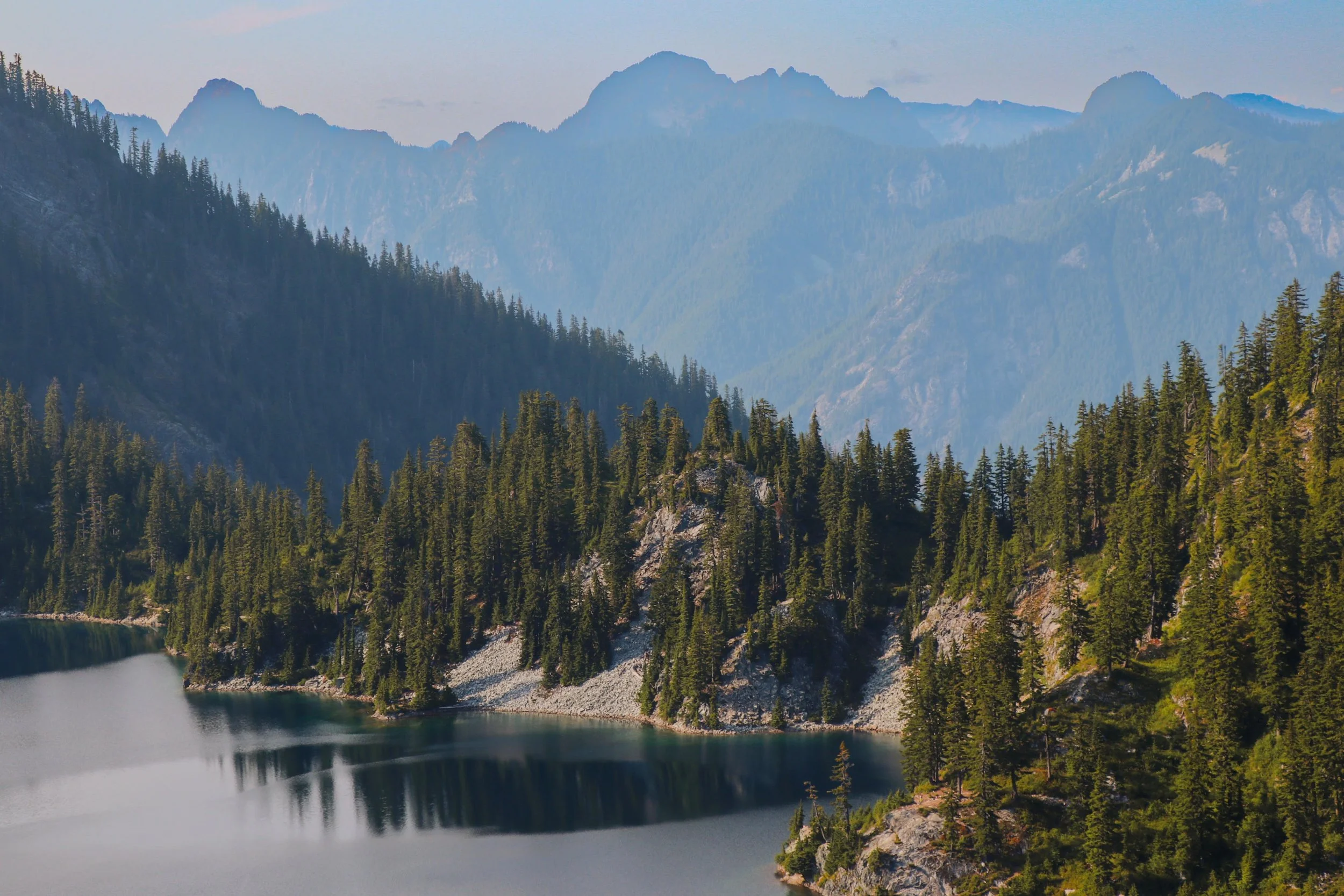
Descending down to Snow Lake
Trail stats
If you live in Seattle for more than five minutes, chances are you’ve heard about Snow Lake or have hiked it. It’s one of the most popular hiking destinations near Seattle for a reason — the lake is genuinely stunning, the trail is accessible, and the camping is solid. I’ve done it multiple times myself.
Most people see it from the same spot. Same view, same angle, same photos.
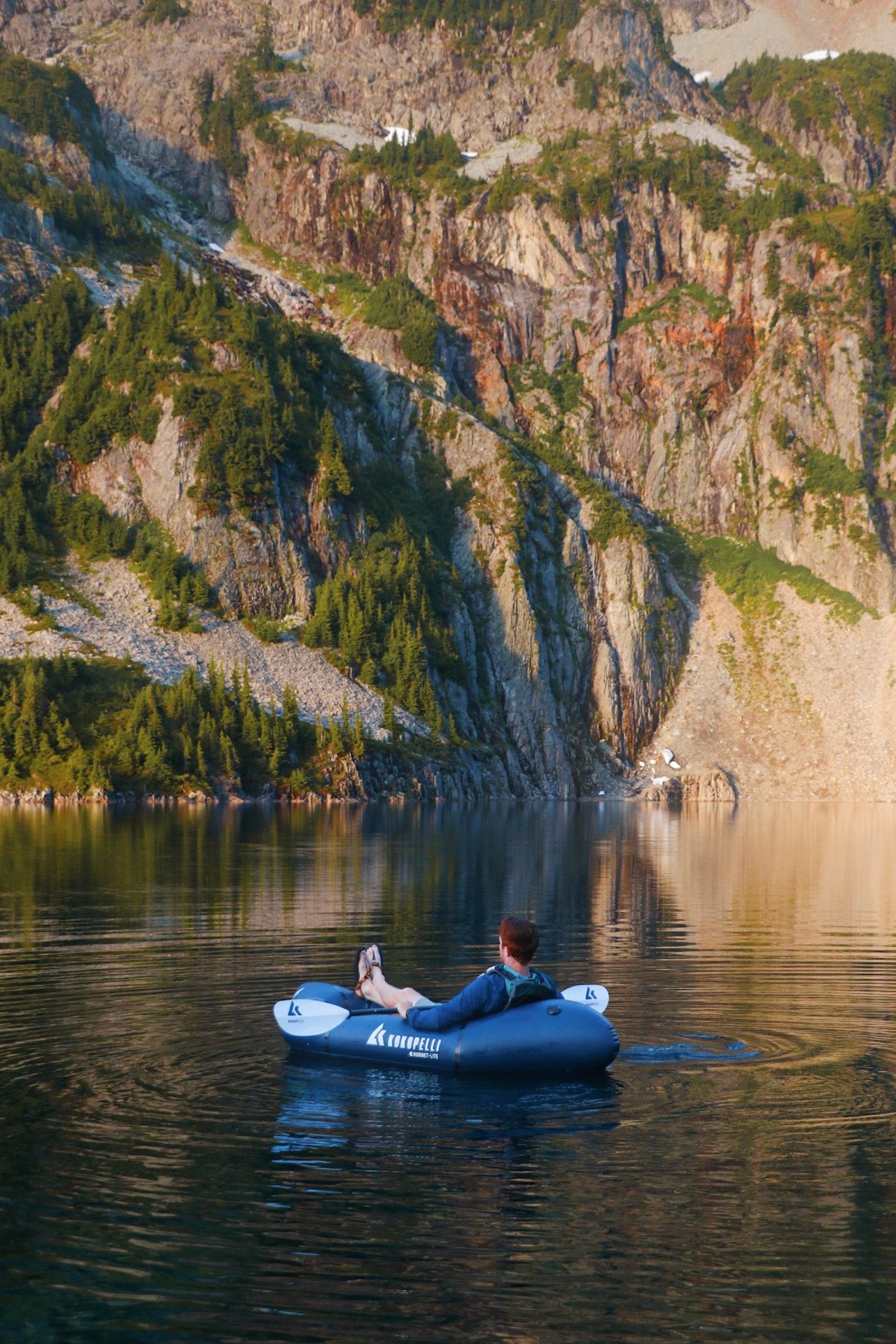
This time, I strapped a packraft to my pack, hiked in after work on a Friday, and paddled to an island on the far end of the lake that you can’t reach any other way. No official trail to it at least. No other campers shared the island with us. Just me, my friend, and Tex. Just us, the cliffs, and a full moon.
Here’s how it went.
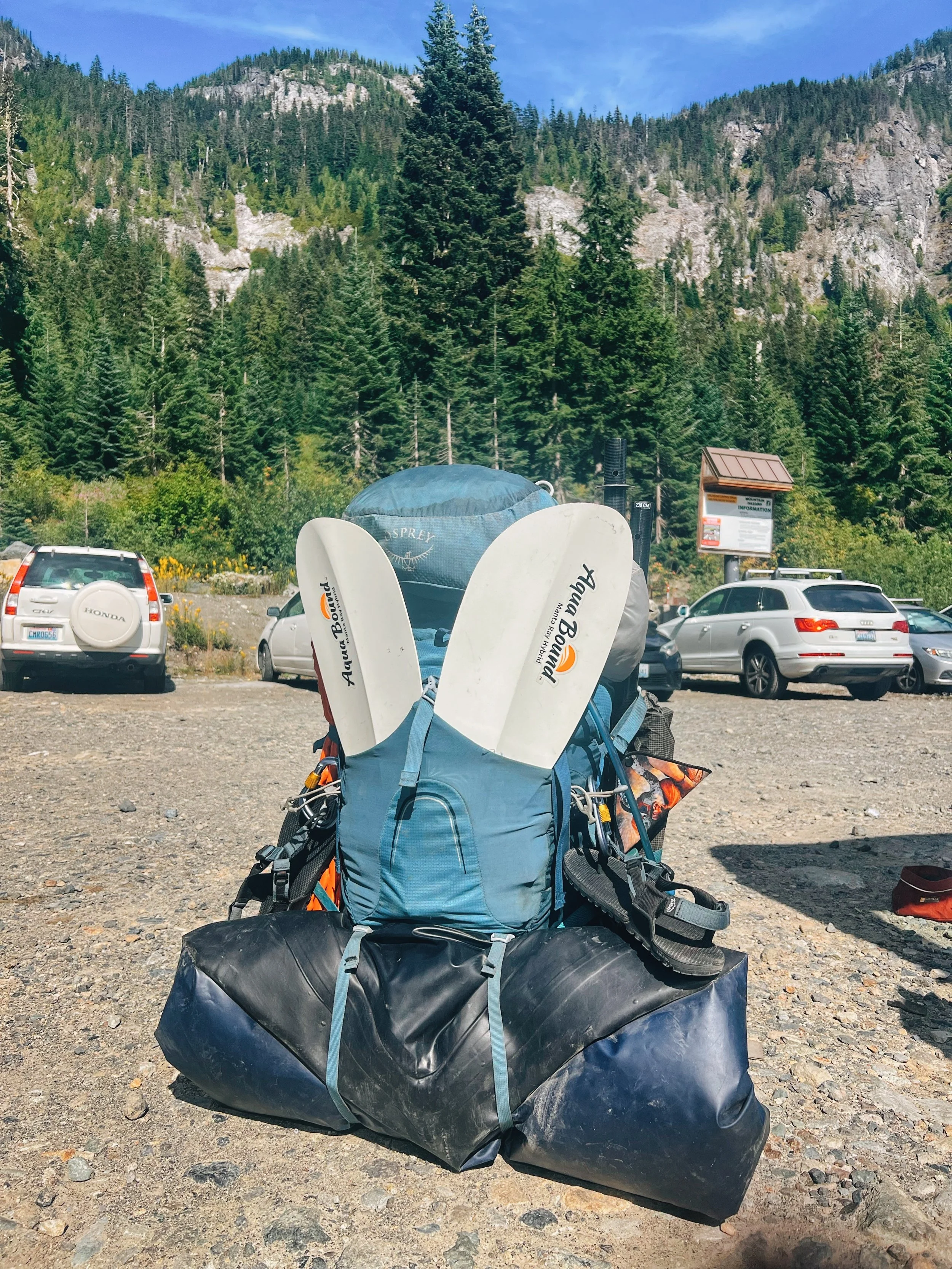
Last minute packing at the Alpental lot
Getting to the Snow Lake Trailhead
Coordinates: 47.4454, -121.4230
The Snow Lake Trailhead is located off Alpental Road near Snoqualmie Pass. In the winter, you will need to buy a parking pass to park here. Road is fully paved, although the parking lot is all gravel but any car should be able to make it with no issues.
There is a large parking lot at the Alpental Ski Area base, it does fill fast on summer weekends (maybe even on weekdays). I left early on a Friday and parking wasn’t an issue, but plan accordingly on weekends.
Hiking to Snow Lake
The Snow Lake Trail is 7.2 miles out and back with about 1800 feet of elevation gain. Moderate on paper, but the trail has some character to it. The Washington Trails Association (WTA) has done a lot of working making this trail more accessible over the years, including building log steps in the steeper sections. Good for knees on the way down. Less good when you’re hauling a pack with a deflated packraft strapped to the outside and an overly excited dog. The stairs are fine. Stairs with 40 pounds on your back are a different conversation.
The first stretch climbs through old-growth forest — genuinely beautiful, the kind of dense forest that makes you feel like you’re not sharing the trail with a million other people. About 1.75 miles in, keep an eye out for a spur trail on the left that leads to an overlook of Source Lake, many climbers embark on this trail to climb the Tooth. Most people walk right past it. It might be worth a quick detour, but I’ve never done it myself.
From there, the trail switchbacks up to a saddle at the wilderness boundary. You are officially entering the Alpine Lakes Wilderness, this is also your first real view of Snow Lake down below, and honestly it undersells it. The lake looks relatively small from up here. It’s not small.
The descent to the lake drops about 400 feet, which means you will earn it back on the way out. But it isn’t so bad especially when views of Snow Lake pop in and out on your right.
Best Time to Hike Snow Lake
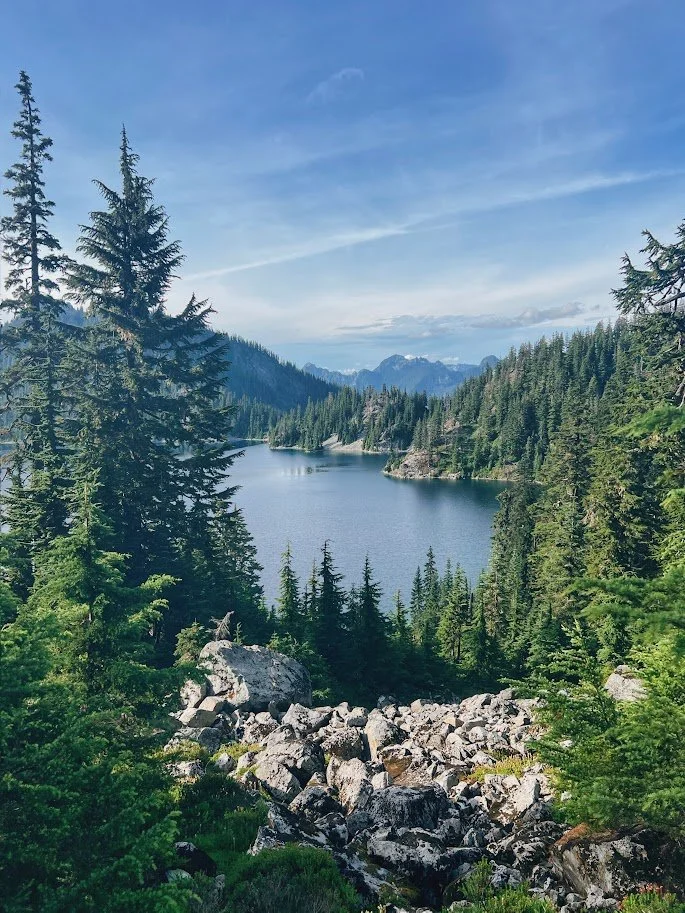
Snow Lake is usually accessible July through November. August is peak wildflower season. I caught the tail end of blooms on my last summer trip. Fall is genuinely spectacular here, with the trees beginning to change colors, making the rocky ridgeline take on a completely different character. If you can swing a weekday in September or October, do it!
I left work early on a Friday in August and started my hike around 4pm. The sun sets late in Washington in the summer so I felt like I had plenty of time to get to the lake, even when hiking at a leisure pace. The trail still had people on it but it felt manageable heading in as most folks were coming down and returning to the lot. One thing I noticed: people weren’t always yielding to uphill hikers, which is technically the correct trail etiquette! If you’re heading down on a trail, give way to those climbing. Not a huge deal, but worth knowing if you’re hauling a heavy pack on a warm afternoon.
I arrived the lake at around 7pm I think. The crowds had thinned significantly from the morning and midday rush, which made the lake felt much more peaceful.
Paddling to the Island
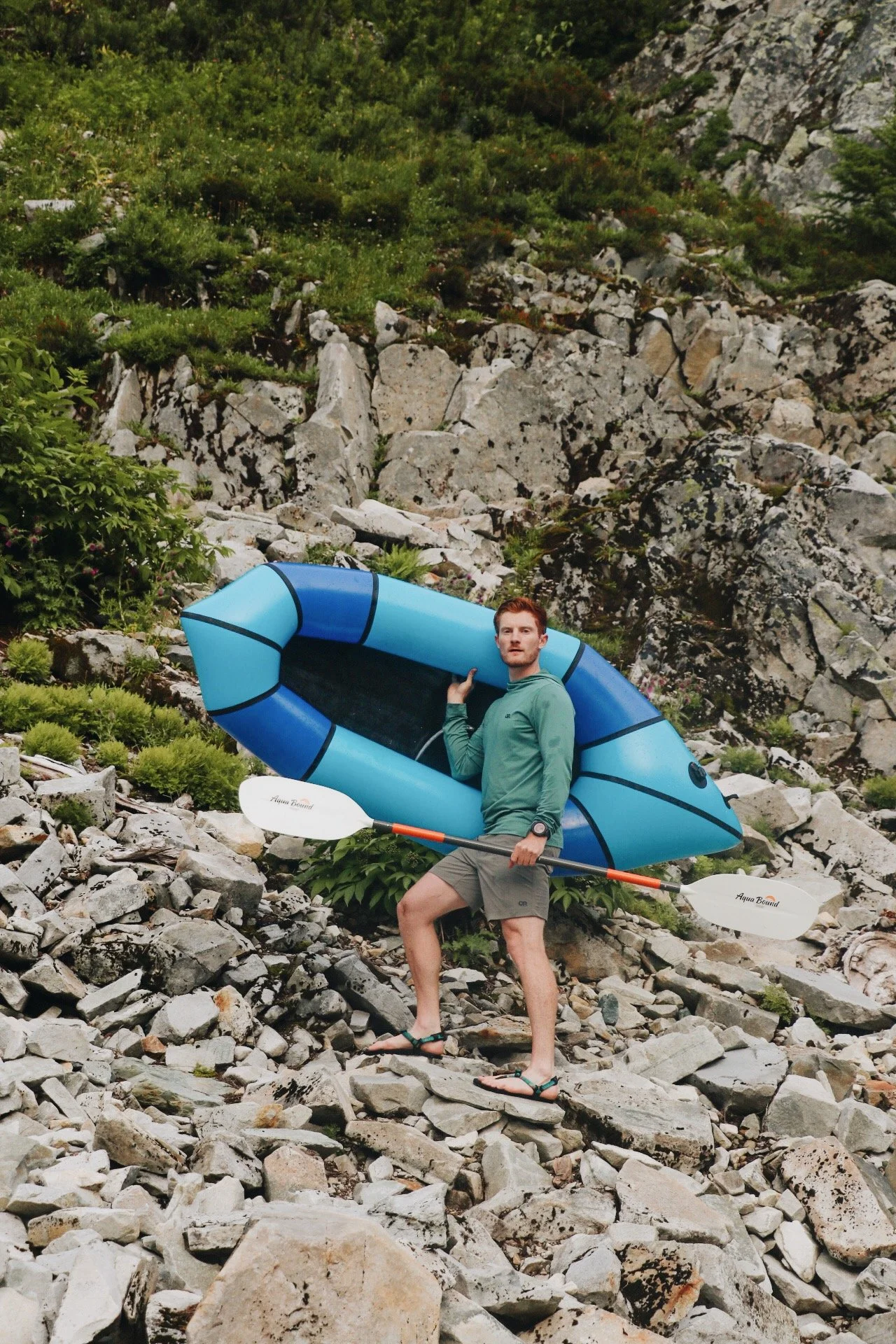
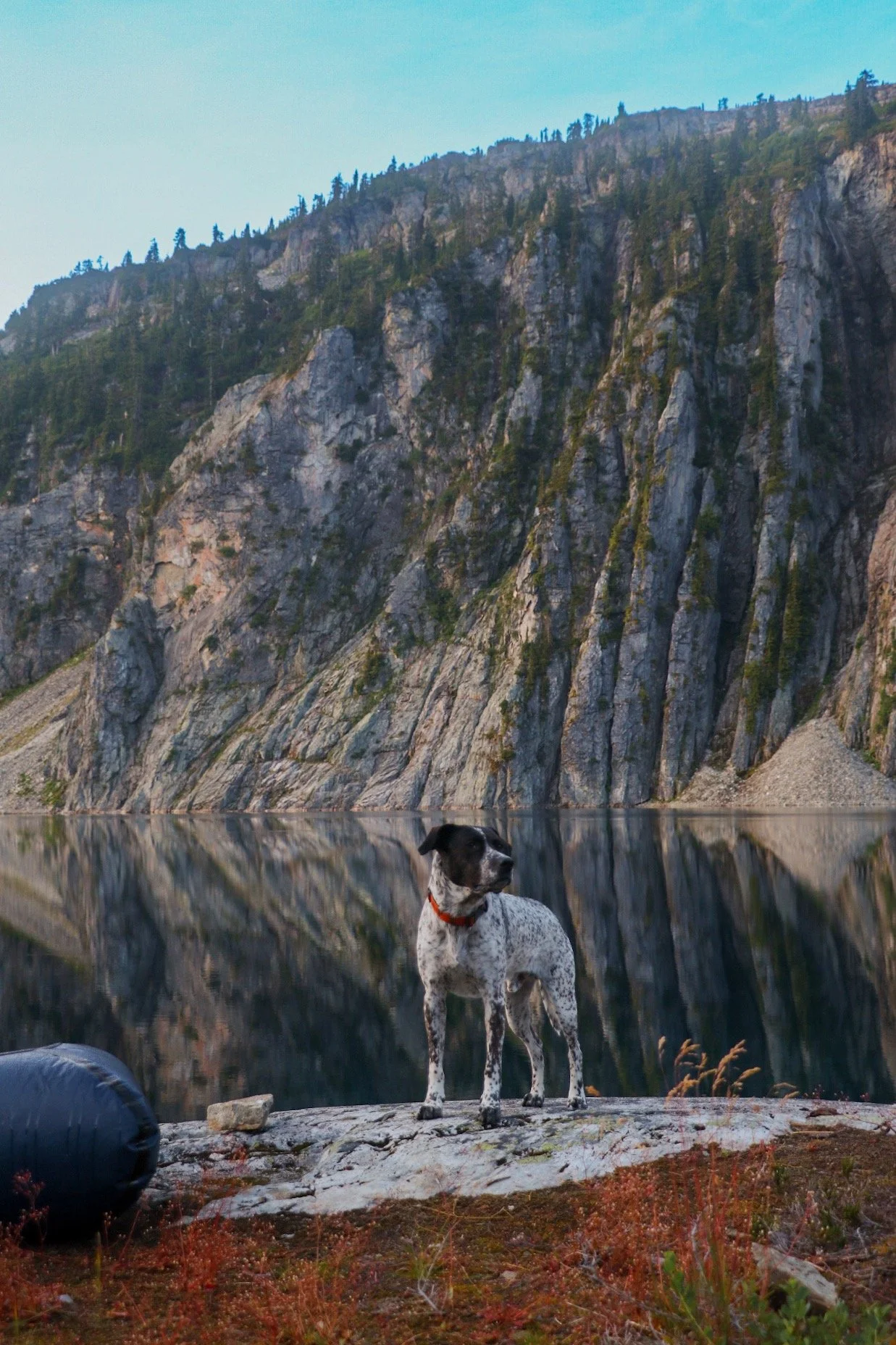
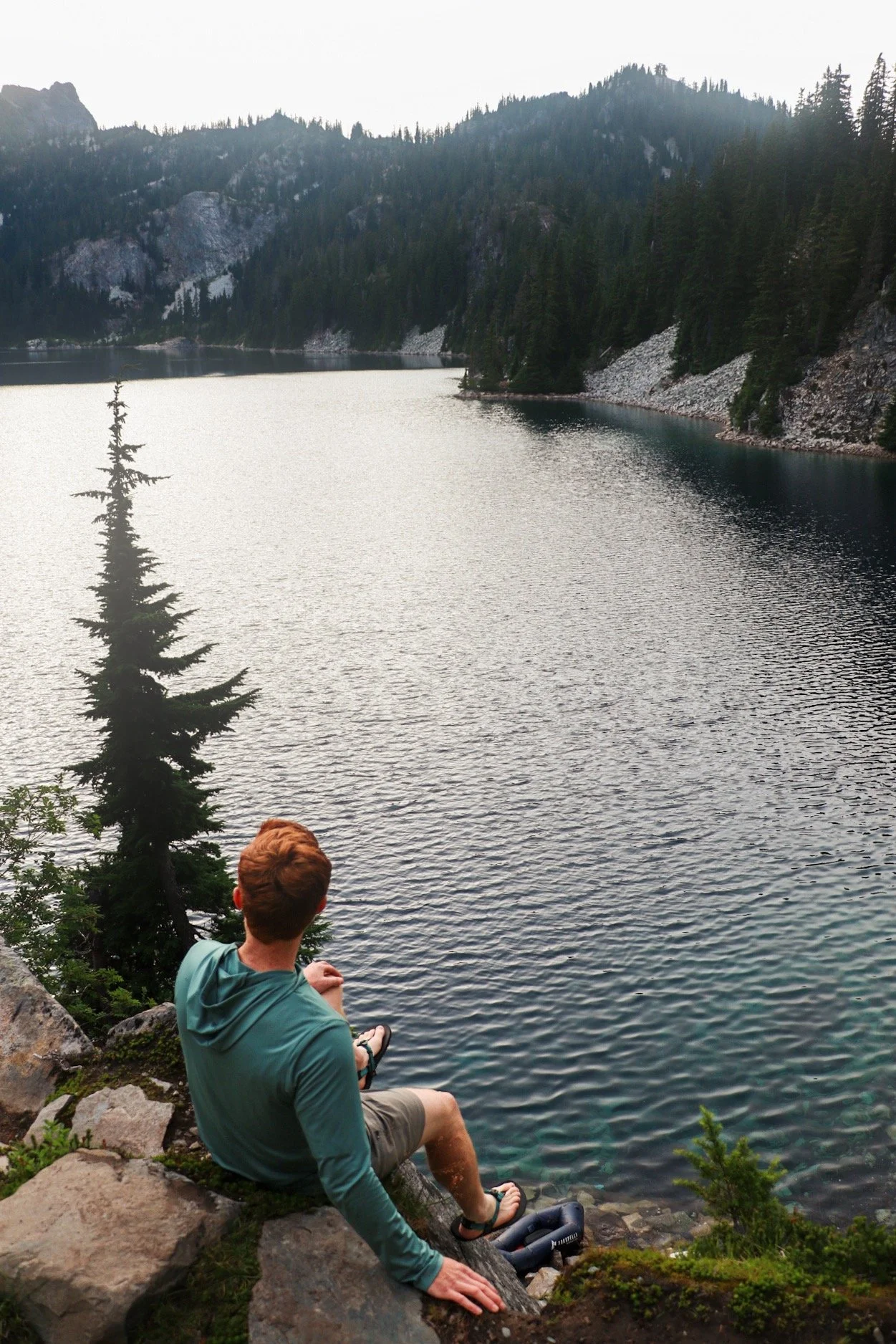
The goal of this trip was to do shoot some content for my friend Adam, who runs Optimum Adventures. I’d planned to camp at the shoreline or further up the small waterfall as you enter Snow Lake, but my friend had other plans.
“We’re paddling to the island.” He said. And I was like “what?”
I’d been to Snow Lake before and never really registered that there was an island. But there it is, on the far end of the lake, completely cut off from the trail. There was no real path to it. The only way to get there is by water.
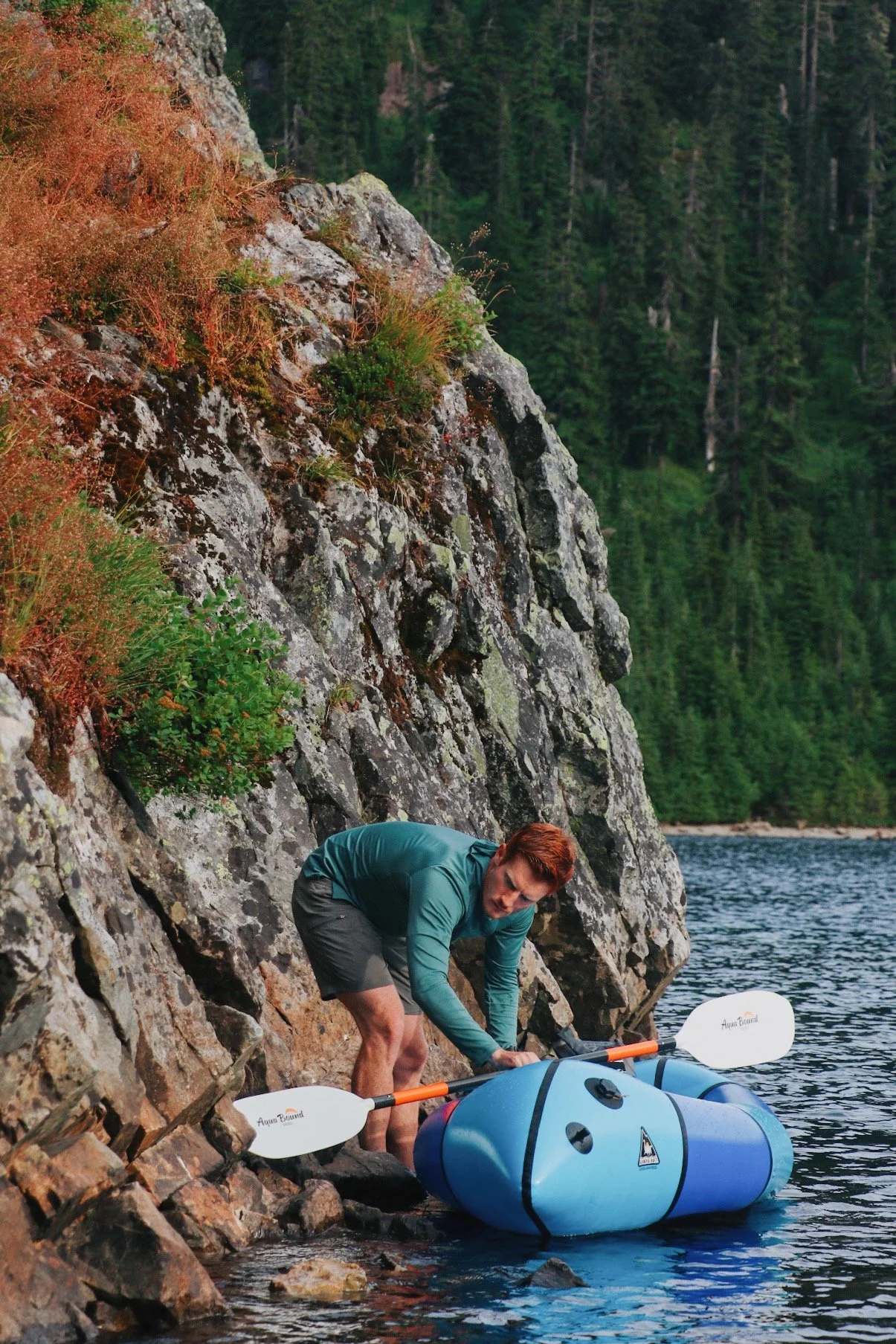
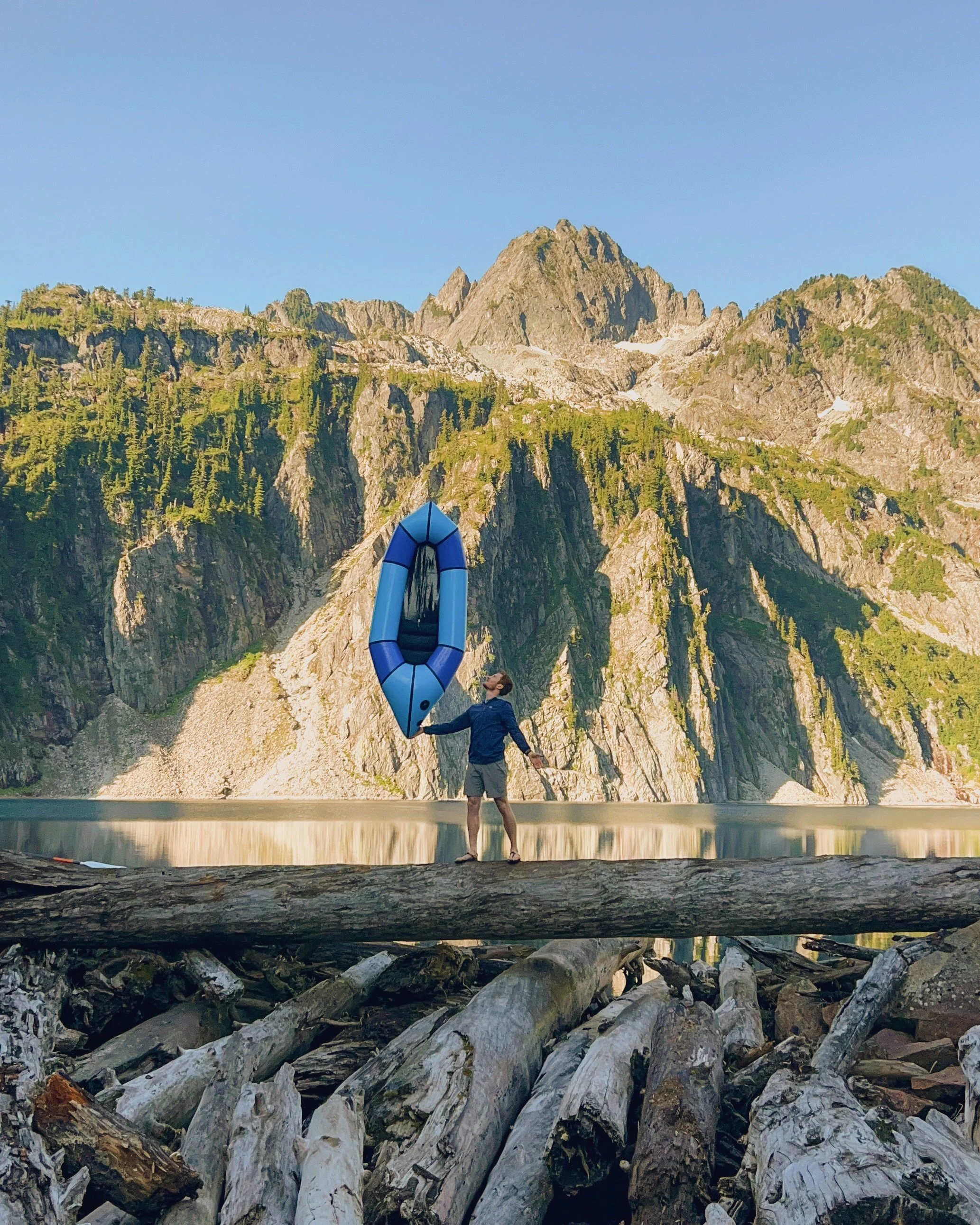
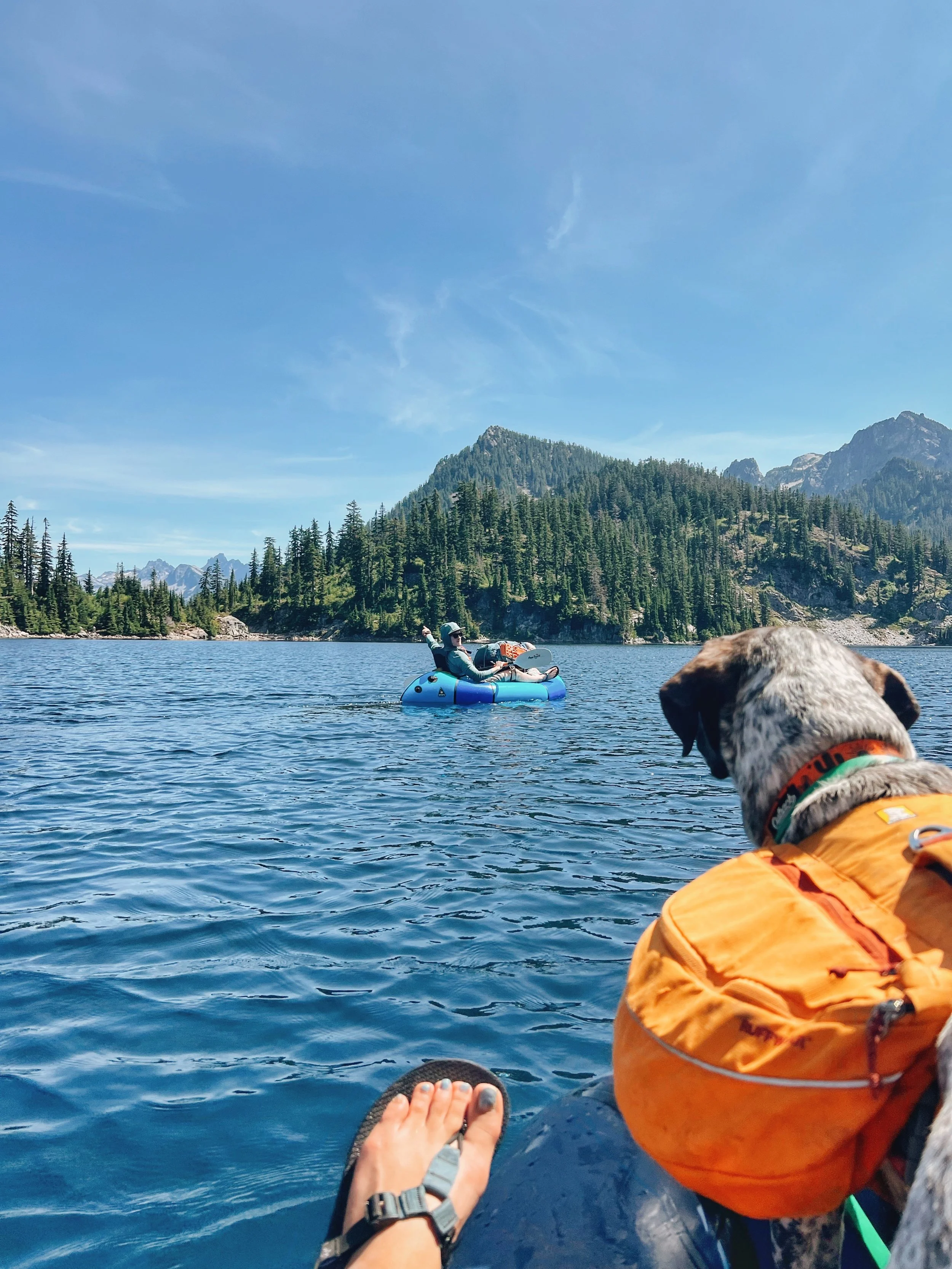
Adam already had camp set up. So I inflated my packraft at the shore and loaded it up. Adam loaded my overnight gear onto his Alpacka raft and I had Tex sitting comfortably in my Hornet Lite. Paddling with a dog and overnight gear adds a whole layer of logistics. (Side note: I need a packraft with a Ti-Zip opening for exactly this reason. Tex in a Hornet Lite is manageable, but it wouldn’t work with all my other gear).
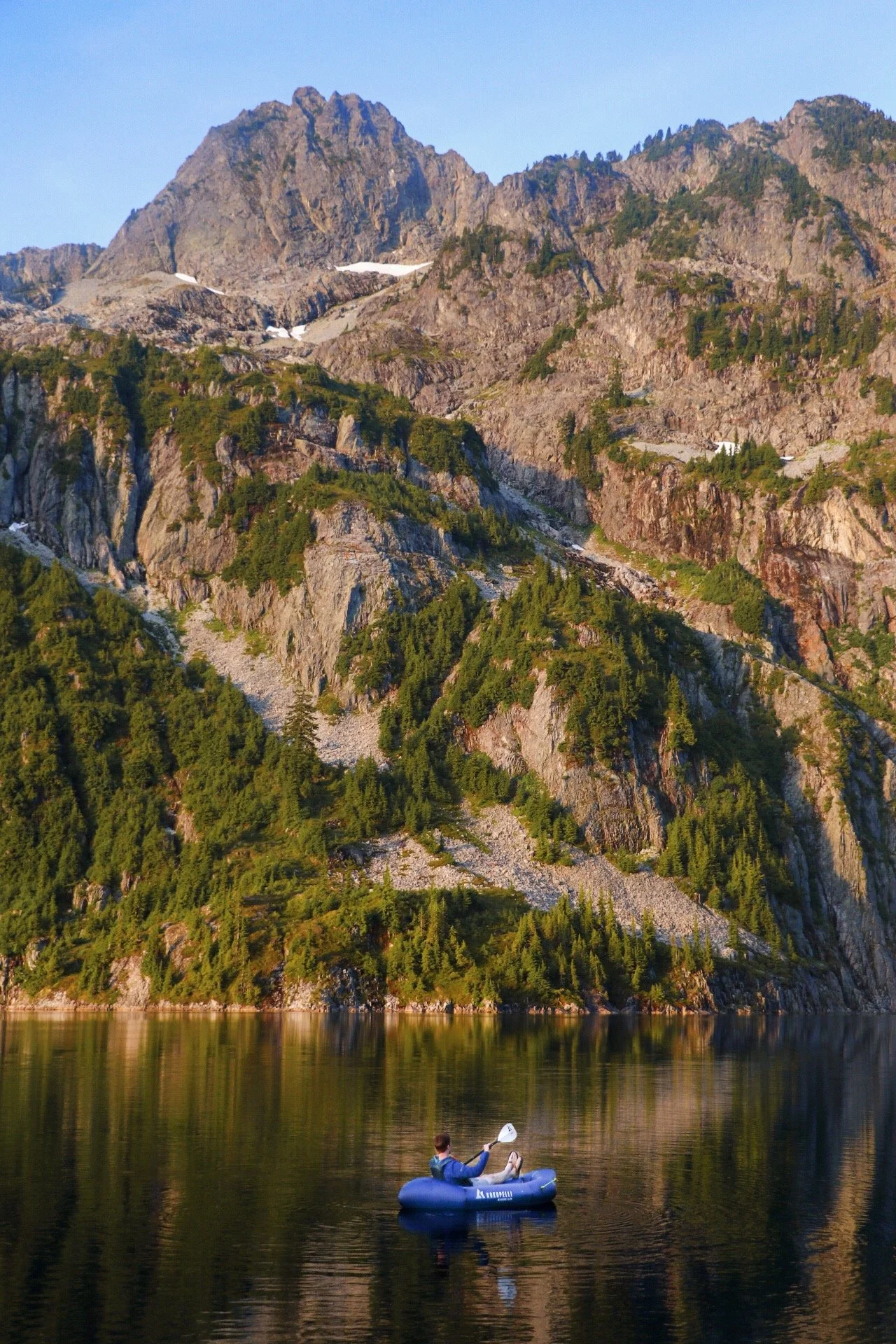
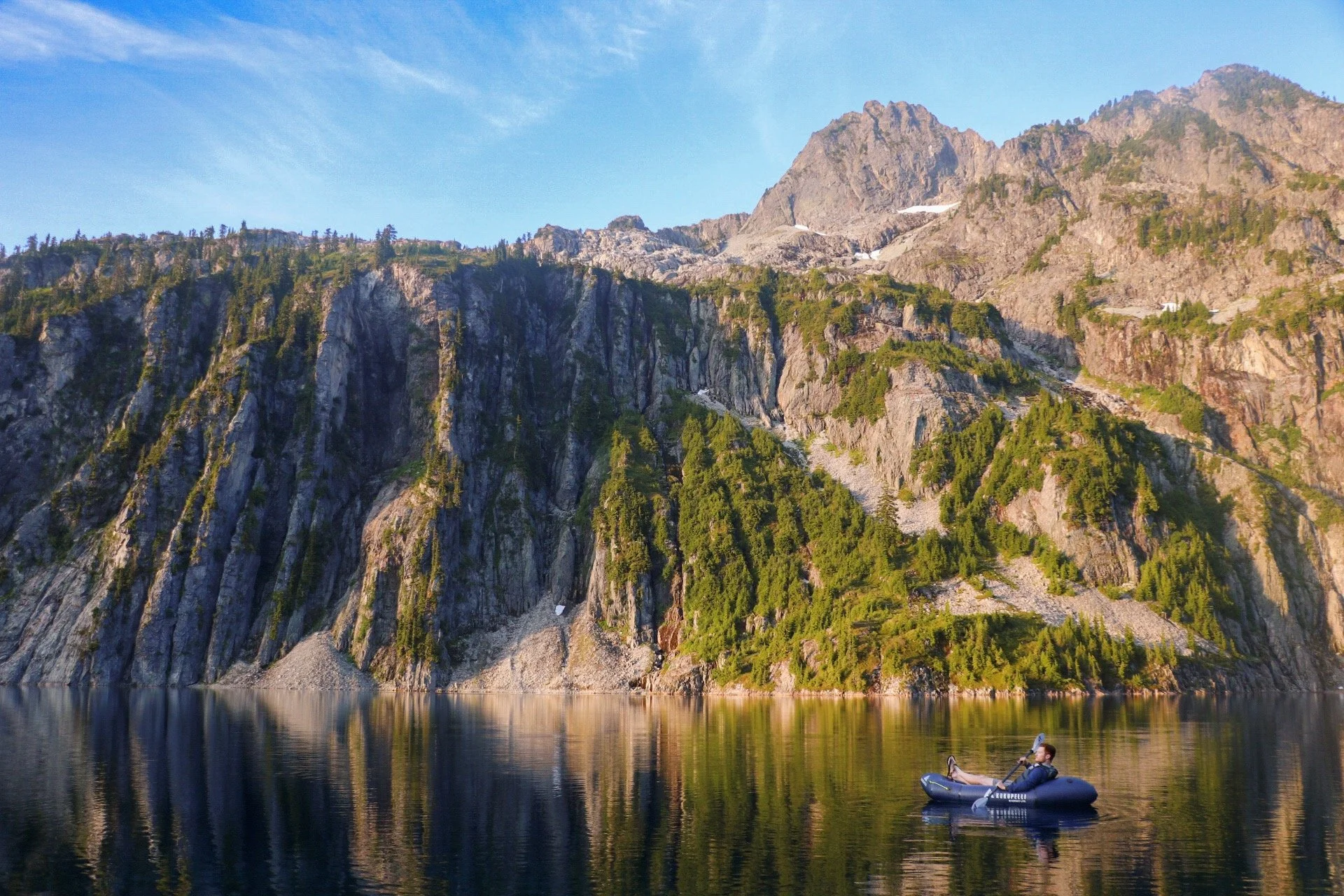
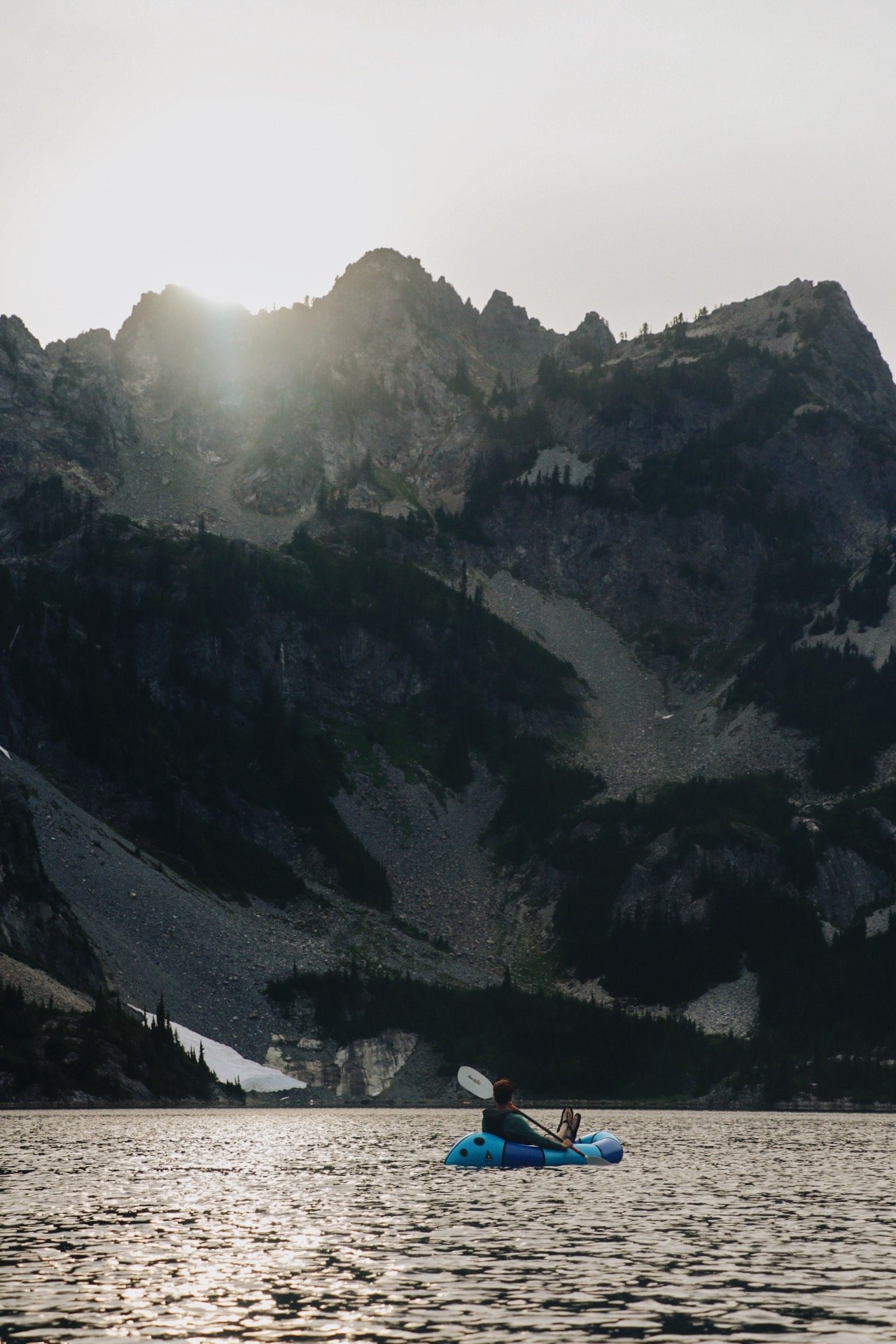
The paddle across took maybe 30-40 minutes. I lost track of time. Despite hiking this trail a few times, this was my first time paddling on the lake. The cliffs along the far wall felt enormous from the water — a completely different scale than what you see from the shore.
When we reached the island, it felt genuinely remote. Technically, the trail to Gem Lake isn’t far beyond, but due to not having direct access to the island, we had it entirely to ourselves.
Camp: Our Own Private Snow Lake
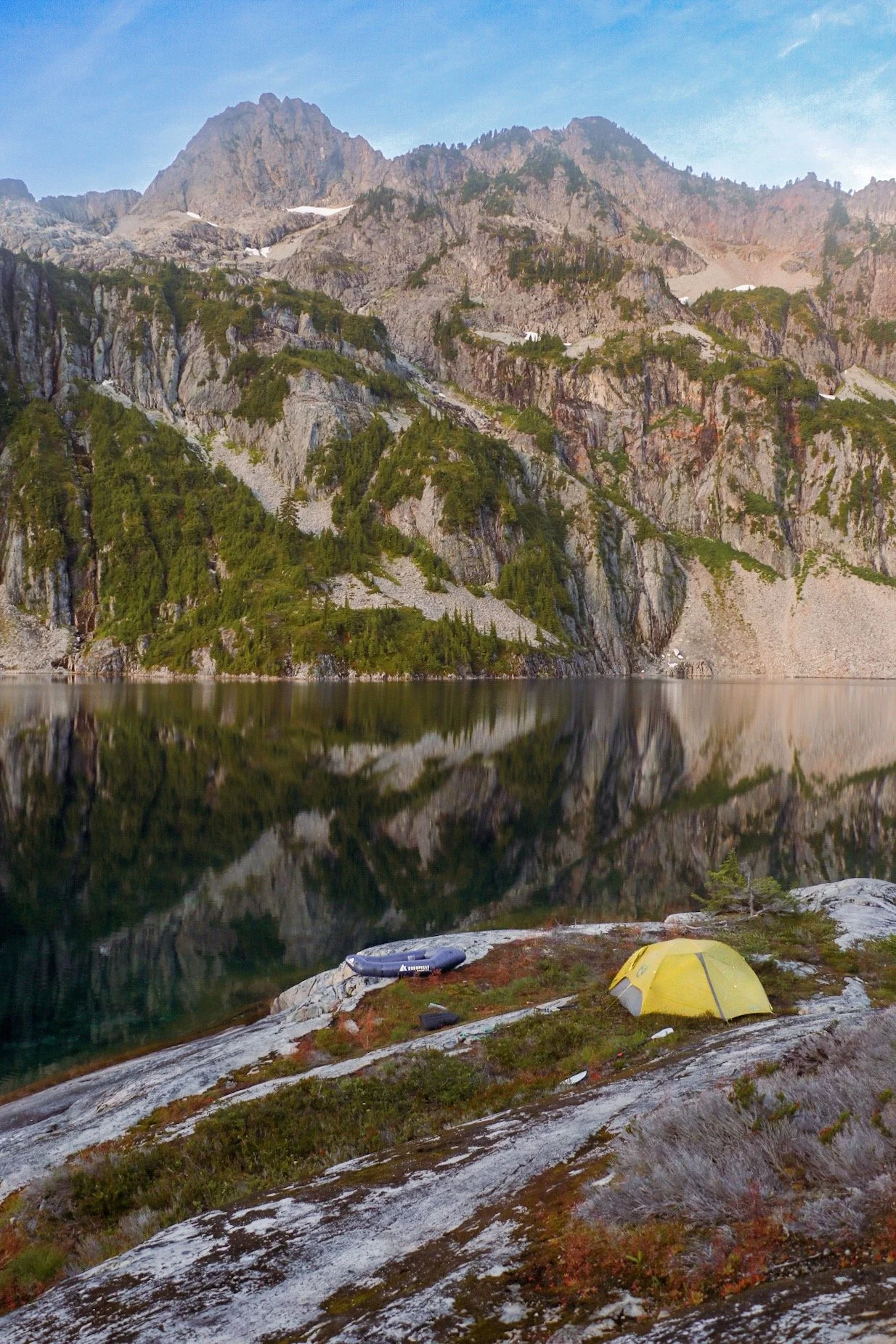
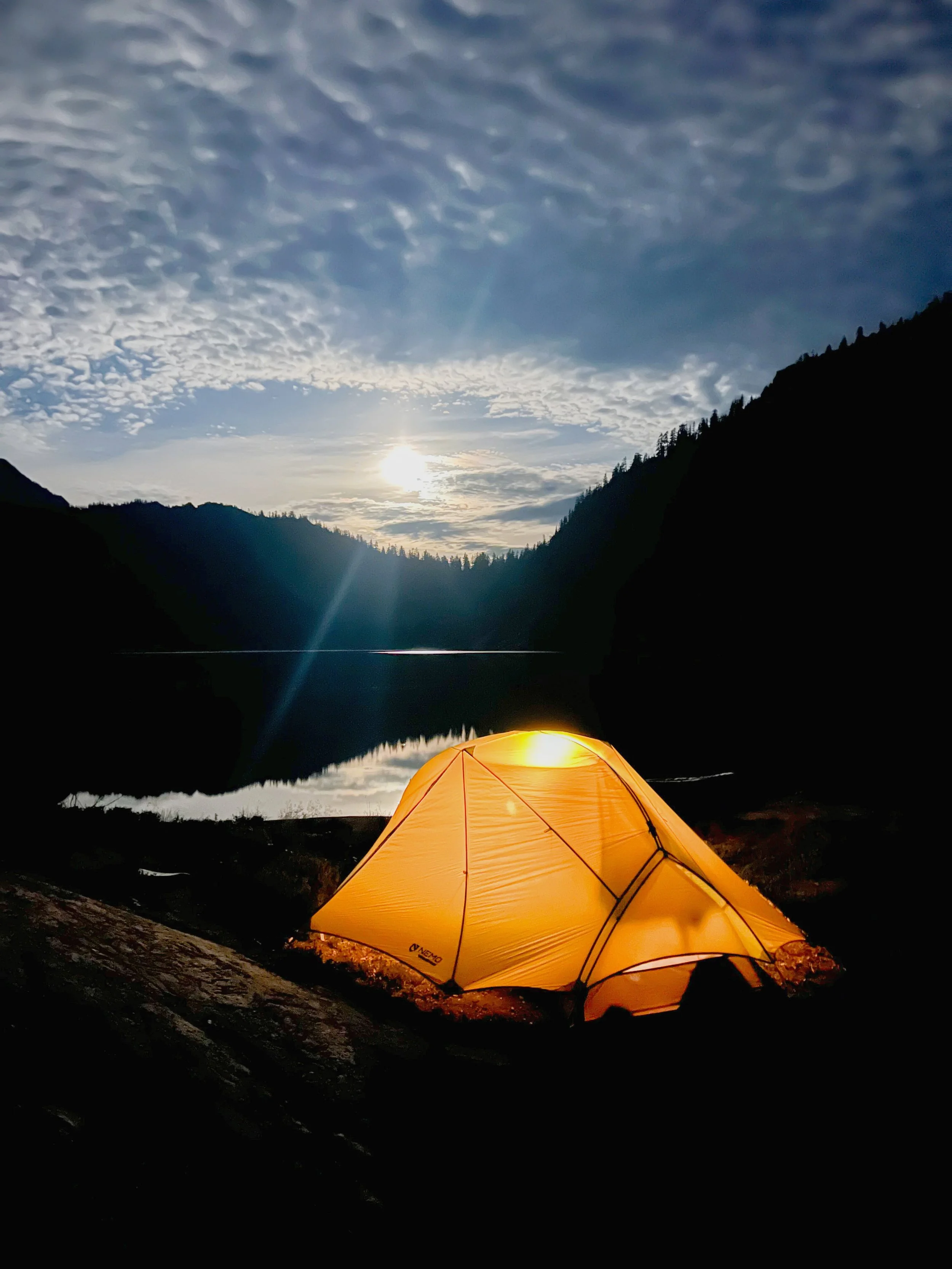
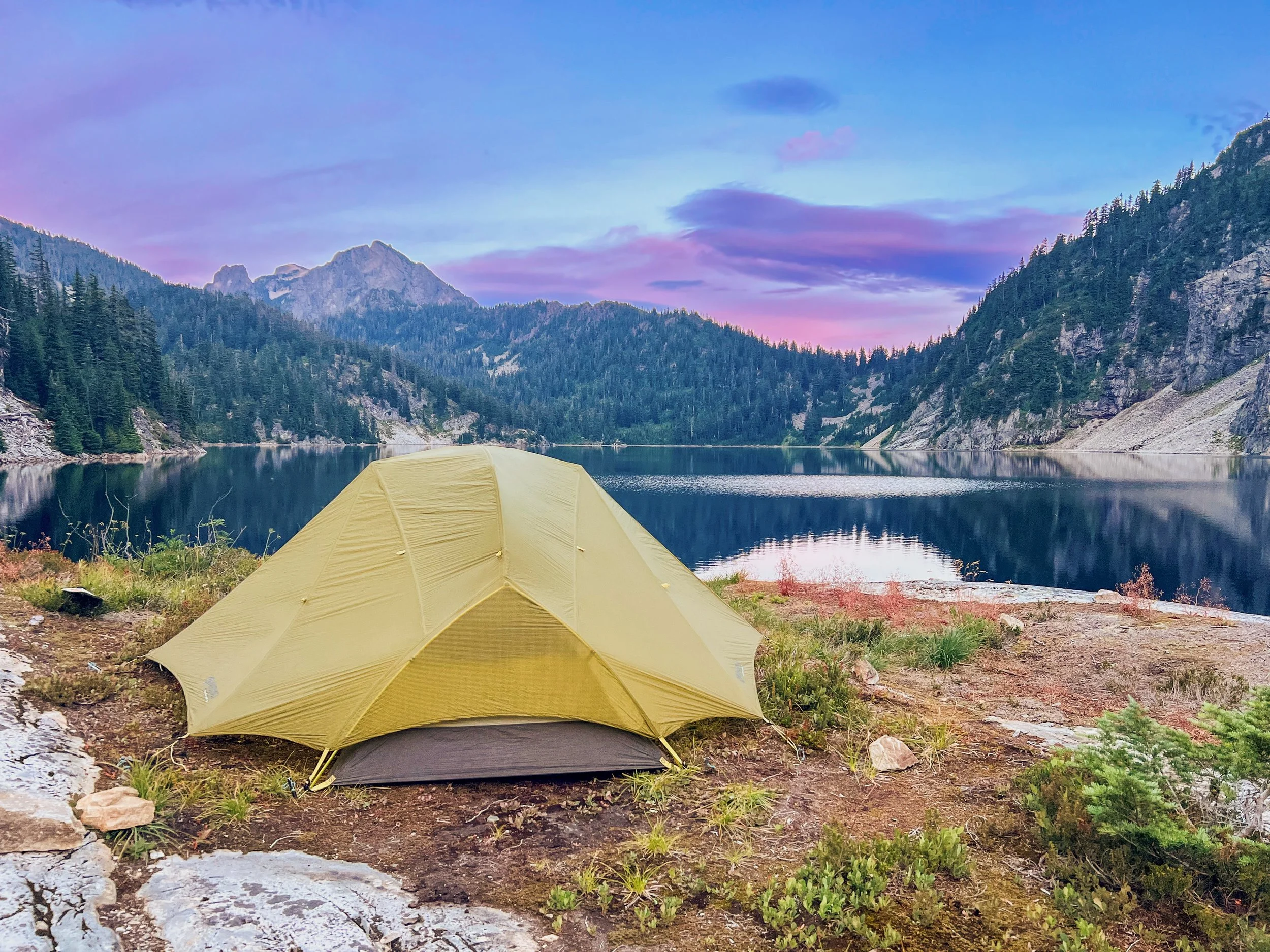
Setting up camp on the island was one of those moments where you feel like you’ve unlocked a secret level of a hike everyone thinks they know.
The perspective from the island is completely different from 99% of Snow Lake visitors ever see. You’re looking back at the approach ridgeline, with the snow-capped peaks close enough to feel like you could almost reach out and touch them. The cliffs reflect off the still water early in the morning before any winds pick up.
It also happened to be a full moon that night. I took advantage.
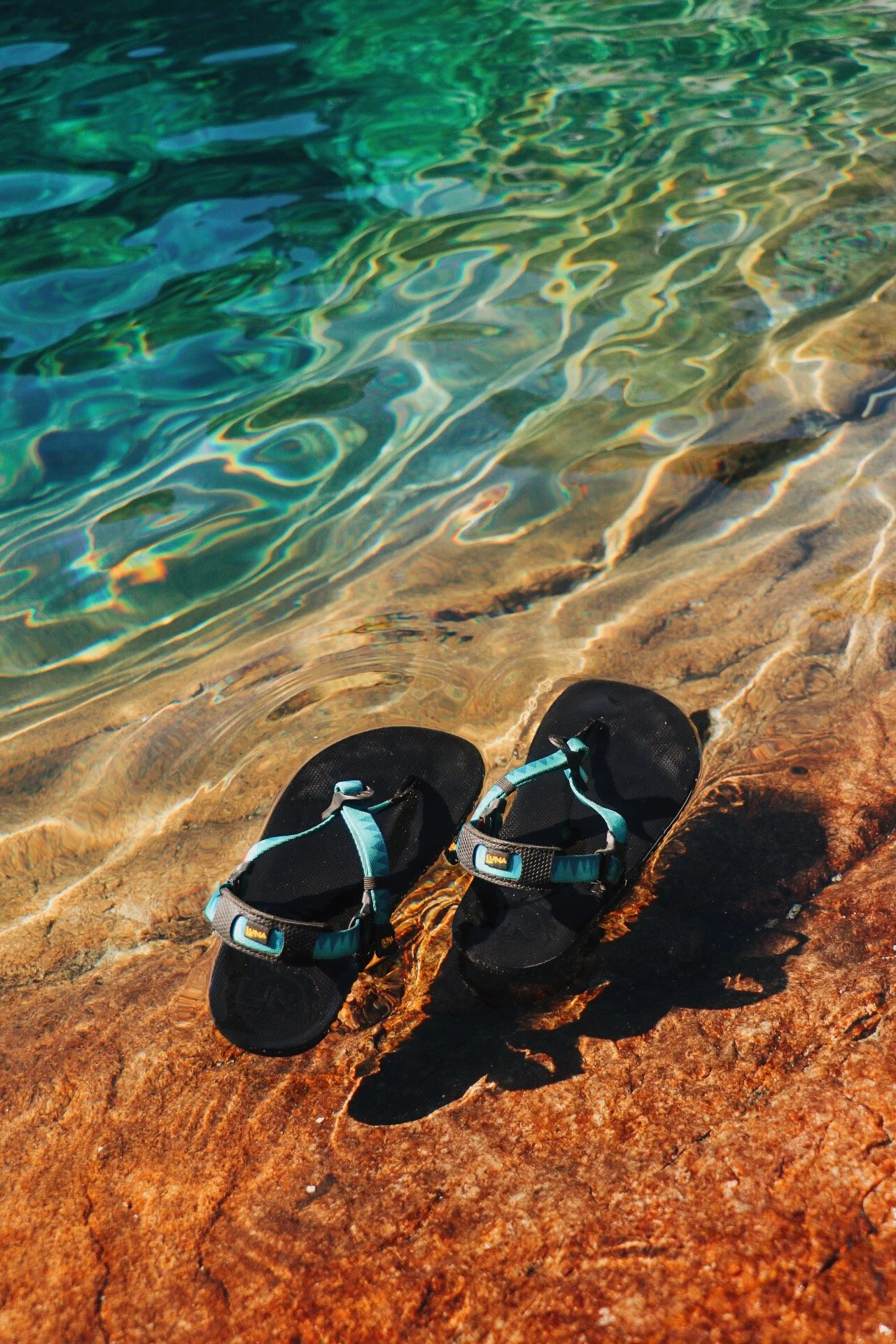
The next morning, we continued shooting content for Adam — action shots on the water, wide landscape frames, the Luna sandals. We also paddled over to the log bridge that connects to the official trail to Gem Lake and spent some time exploring.
What To Know Before You Go
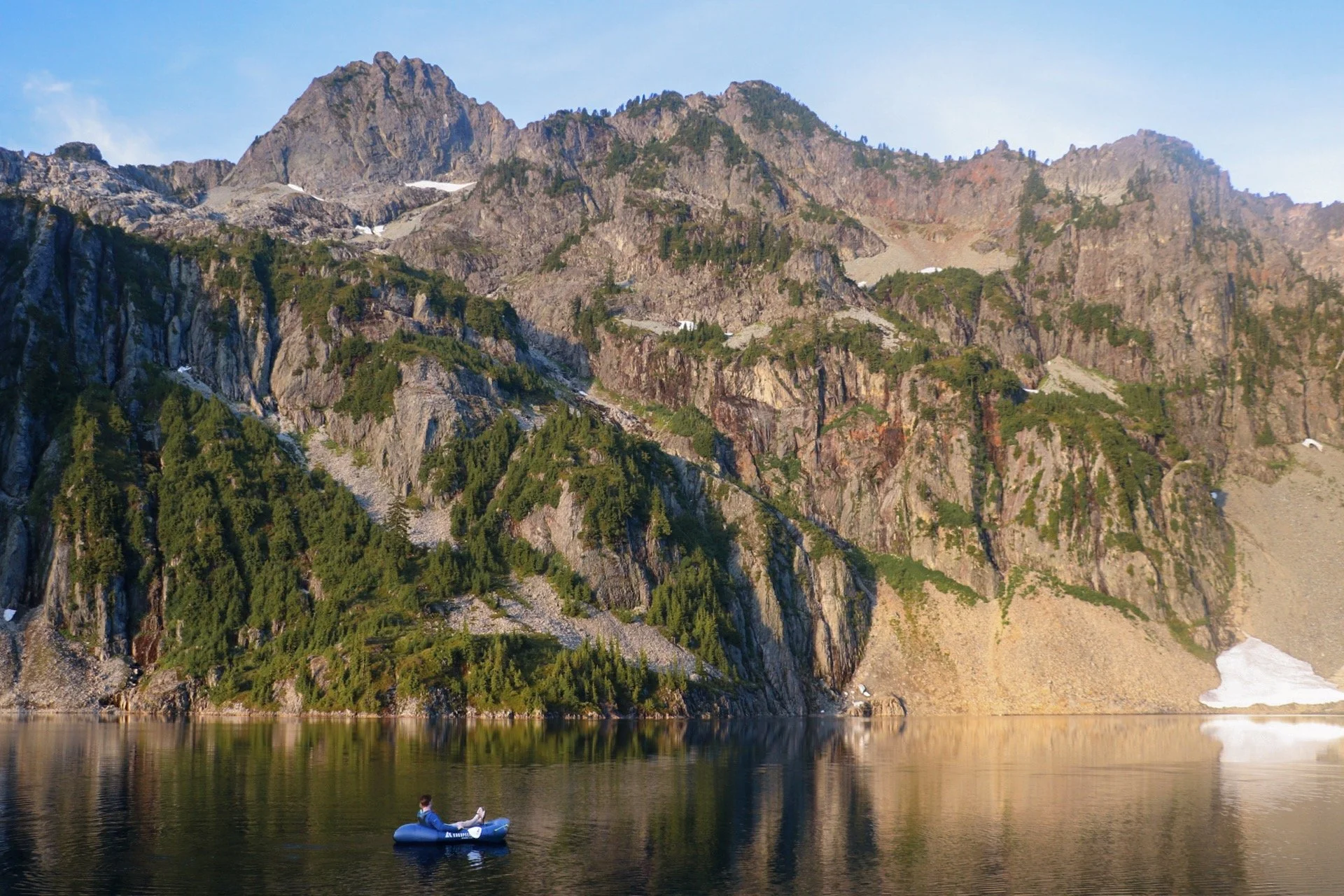
Packrafting on Snow Lake
Camping: Snow Lake is a well-used area. There are designated campsites scattered around the shoreline, with most of them being further along the trail once you past the small waterfall. The island itself is not an official campsite, so camp on durable surfaces and follow Leave No Trace (LNT) principles. Sites do fill up fast on summer weekends; get in early or plan for a weeknight trip instead.
Permits: No overnight permits are required, but this is a heavily used wilderness area. Check Recreation.gov and the WTA conditions pagefor updates before you go.
Water: Snow Lake is the main source. There might be water sources along the trail depending on how dry the season has been. Filter everything!
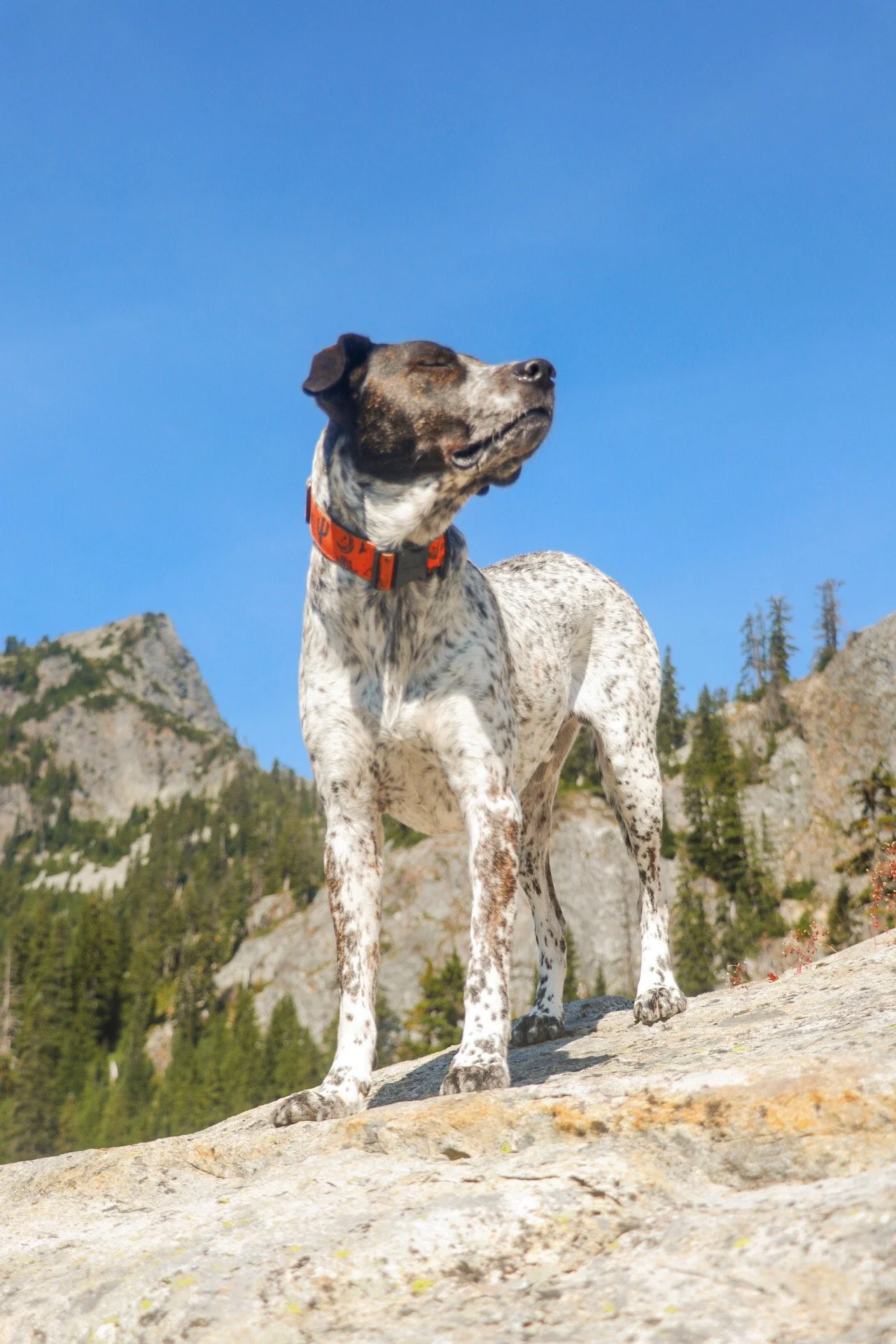
Dogs: Tex-approved. Dog-friendly trail and lake. Must be on leash.
Packrafting Snow Lake: Totally doable and highly recommended. I did see folks that hauled their paddleboards in when we were hiking out the next day. The lake is calm and the lake is just big enough for you to do some exploring. Bring a dry bag for anything can’t get wet.
Photos From Snow Lake
Final Thoughts
Snow Lake is genuinely one of the best hiking and overnight destinations in the Alpine Lakes Wilderness — I don’t say that just because it’s popular. The lake earns it. But if you have a packraft and you want to see a side of it that most people never will, paddle to the island or go further towards Gem Trail on the trail. It’s one of those experiences that make you feel like you found something that wasn’t meant to be found.
And if you’re curious about packrafting Washington’s alpine lakes more broadly and how to get started, I’ve got a full guide.
Resources
Trail info & conditions
Snow Lake — Washington Trails Association — best place to check recent trip reports before you go; conditions change fast in the Alpine Lakes
USFS Alpine Lakes Wilderness — Mt. Baker-Snoqualmie — official regulations, permits, and closures
Leave No Trace — Snow Lake sees a lot of traffic; LNT principles matter here more than most places
Before you go / after you're back
Volition Brewing — North Bend's adventure-oriented craft brewery, great stop on the way out. Dog-friendly taproom, food trucks on weekends. 112 W North Bend Way.
Dru Bru — right at Snoqualmie Pass, practically on your way home. Outdoor patio with views of Guye Peak, 20 taps including German-style beers and housemade sodas. Perfect post-hike stop if you don't want to wait until North Bend.
Packrafting Resources
Optimum Adventures — Adam's operation; worth following if you're curious about packrafting trips and instruction in the PNW
American Packrafting Association — good starting point if you're new to the sport and want safety resources and community